

IPTV Smarters VPN Guide (UK 2026): Privacy + Performance Setup Step-by-Step
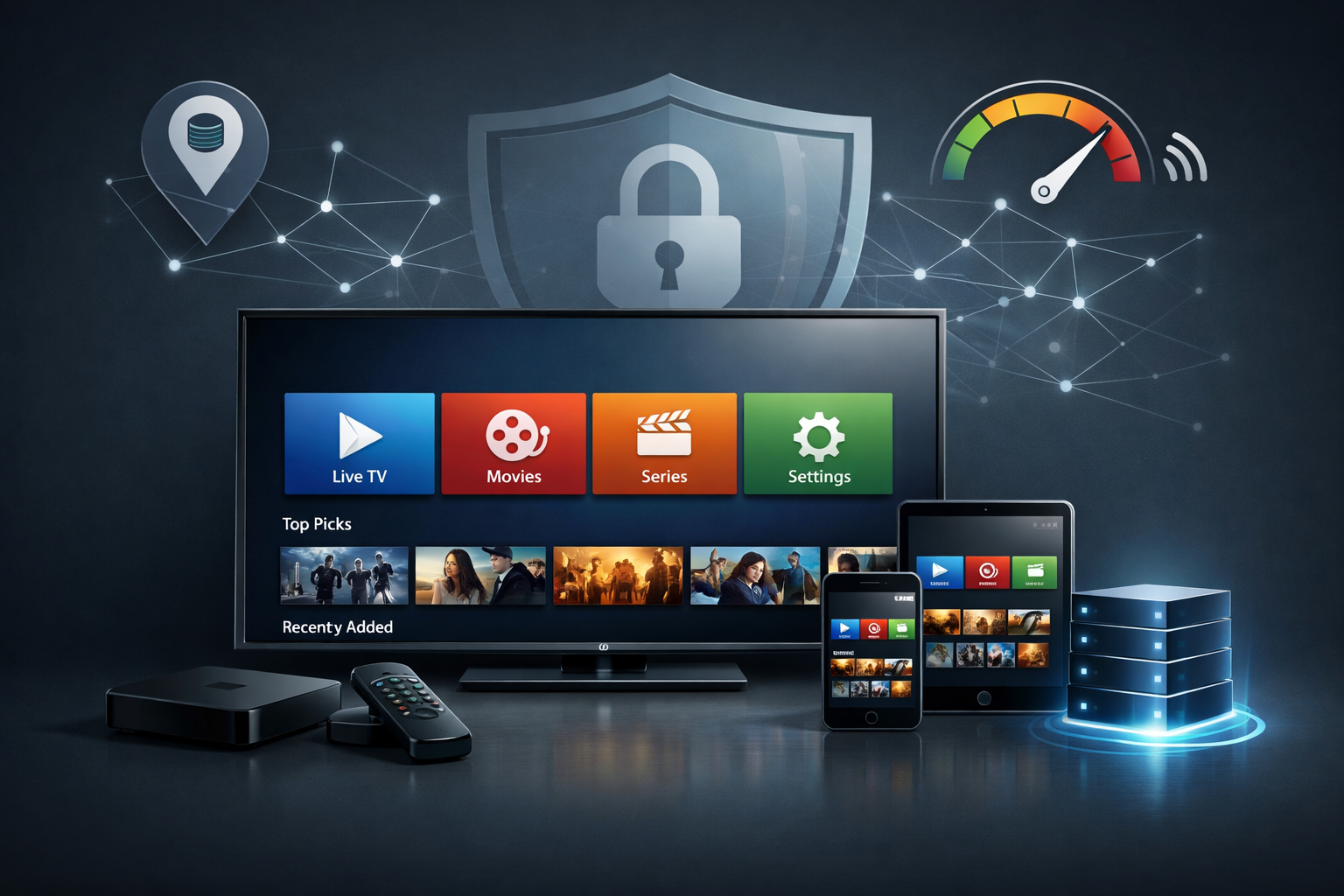
IPTV Smarters VPN Guide = a practical checklist to help you decide whether a VPN improves playback in the UK (evenings, busy Wi-Fi, unstable routes), and how to configure it safely on Firestick/Fire TV, Android/Google TV, iPhone/iPad, and Windows. We keep it simple: choose a nearby server, use a fast protocol (often WireGuard), and test the same stream with VPN OFF vs ON to prove what’s actually happening.
Table of Contents
Jump- What you’ll need
- VPN basics for streaming (UK)
- Step 1: When a VPN helps (and when it doesn’t)
- Step 2: Choose streaming-friendly VPN settings
- Step 3: Set up VPN by device type
- Step 4: Best testing method (prove if VPN helps)
- Step 5: Recommended VPN tweaks for better streaming
- Step 6: Common issues & fixes
- UK home network checklist (router/Wi-Fi)
- Privacy settings that matter (without breaking playback)
- FAQ (UK)
- External resources
- Related guides on our site
What you’ll need
Checklist- IPTV Smarters (Smarters Player / Smarters Pro) installed on your device
- A reputable VPN service (paid is usually more stable than free)
- Stable internet connection (Ethernet or strong Wi-Fi)
If you still need help with Smarters installation on Fire TV, see our internal guide: IPTV Smarters on Firestick setup.
VPN basics for streaming (UK)
Clear explanation- Privacy: Your ISP sees an encrypted connection to the VPN, not the full details of every site/service you connect to.
- Routing: Your traffic may take a different path across the internet, which can improve (or worsen) stability depending on congestion and peering.
Step 1: When a VPN helps (and when it doesn’t)
DecisionA VPN can help if you have:
- ISP congestion / throttling-like slowdowns at peak hours (especially evenings)
- Unstable routing (random buffering despite good local internet)
- Frequent stream timeouts that improve when using a mobile hotspot
- Privacy preference on shared networks (public Wi-Fi, shared flats, hotels)
A VPN usually won’t fix:
- A provider/server that is overloaded or down
- Underpowered device issues (low storage, overheating, too many background apps)
- Weak Wi-Fi signal (router placement, interference, distance)
- If everything buffers (all apps), fix Wi-Fi/router first.
- If only some channels buffer, it can be upstream capacity or that specific stream.
- If it’s worse only at night, test congestion + route changes (VPN proof test).
- Typical congestion window: 7–11pm
- More devices online → more contention
- Neighbourhood Wi-Fi interference increases
If you suspect device limits, see best devices & setup for IPTV. If you suspect Wi-Fi or network routing issues, keep going to Step 4 (prove it).
Step 2: Choose streaming-friendly VPN settings
Best practice- Nearby server location: UK server (or the closest nearby region) for lowest latency
- Fast protocol: WireGuard is often best if available
- Split tunnelling (optional): route only Smarters through VPN (can improve speed)
- Keep it simple: disable “extras” temporarily (ad blockers/filters can break playback)
- Very distant servers
- Multi-hop / double VPN (often slower)
- “Ultra secure” modes that reduce speed
| Setting | Best for UK streaming | Why it matters |
|---|---|---|
| Server location | UK (or closest nearby) | Lower latency + fewer hops = smoother playback |
| Protocol | WireGuard (or Automatic) | Often fastest and most stable on modern devices |
| Split tunnelling | Optional | Routes only Smarters through VPN; keeps other apps direct |
| Ad/DNS filtering | Off for testing | Can block playback or interfere with stream endpoints |
Step 3: Set up VPN by device type
Device steps- Install your VPN app from the Amazon Appstore.
- Sign in.
- Choose a nearby UK server.
- Connect.
- Open IPTV Smarters and test 3 channels.
Tip: Enable auto-connect on startup if your VPN supports it.
- Install VPN from the Google Play Store.
- Sign in → select a nearby UK server.
- Protocol: choose WireGuard (if available).
- Connect → then open IPTV Smarters and test.
Optional: If your VPN offers split tunnelling, route IPTV Smarters through the VPN and leave other apps direct.
- Install VPN from the App Store.
- Sign in → select a nearby UK server.
- Connect.
- Open IPTV Smarters and test channels.
Tip: Keep Low Power Mode OFF while testing (it can affect background networking).
- Install the VPN desktop app from the official source.
- Sign in.
- Set protocol to WireGuard (or “Automatic” if unsure).
- Connect to a nearby UK server.
- Open IPTV Smarters Pro and test.
Step 4: Best testing method (prove if VPN helps)
Proof test- Test IPTV Smarters without VPN (same channel, same time).
- Turn VPN ON (nearby UK server) and test the same channel.
- Compare results.
- Less buffering with VPN → routing/congestion was likely the issue
- No change → likely provider/channel/device/Wi-Fi issue
- Worse with VPN → server too far or protocol not ideal (switch server/protocol)
Step 5: Recommended VPN tweaks for better streaming
OptimiseA) Change server location (best first fix)
- Pick the closest location to you (UK first).
- If still buffering, try 2–3 nearby servers within the UK (or closest region).
B) Switch protocol
- Try WireGuard first.
- If problems persist, try the next best option offered (often “Automatic” or “OpenVPN UDP”).
C) Disable extra features temporarily
Turn off (for testing):- Ad blocking
- Malware filtering
- “Secure core” / multi-hop
- Traffic obfuscation modes (unless you specifically need them)
Step 6: Common issues & fixes
TroubleshootIPTV works without VPN but not with VPN
- Change VPN server (nearby UK server).
- Switch protocol (WireGuard / Automatic / OpenVPN UDP).
- Disable ad-blocking or DNS filtering inside the VPN app.
VPN disconnects while streaming
- Enable Auto-reconnect (and auto-connect at startup).
- Disable battery optimisation for the VPN app (Android).
- Use Ethernet instead of weak Wi-Fi (where possible).
Streaming is slower with VPN
- Use a closer server (UK first).
- Avoid multi-hop.
- Try a different protocol.
UK home network checklist (router/Wi-Fi)
High impactUse 5GHz Wi-Fi (or Ethernet)
5GHz typically has less interference and higher throughput. Ethernet is best if your setup allows it.
Move the router (if possible)
High, central placement reduces dead zones. Avoid hiding it behind the TV, in a cupboard, or near metal objects.
Reduce evening congestion
Pause large downloads/updates during live viewing. Too many devices streaming at once can cause contention.
Reboot routine
If issues appear suddenly, restart router + streaming device. This clears stuck routes, leases, and memory.
Want the deeper explanation of buffering causes and stability levers? Read how IPTV streaming works.
Privacy settings that matter (without breaking playback)
Safe setupRecommended privacy defaults
- Auto-connect on start (reduces accidental “no VPN” sessions)
- Kill switch (optional): useful if privacy is critical, but test it first (some apps behave oddly if the connection drops)
- WireGuard where available (strong + efficient)
- Trusted networks list (optional): always use VPN on public Wi-Fi
Settings to treat carefully
- DNS/ad blocking: great in principle, but can block stream endpoints — test with it OFF first
- Multi-hop / Secure Core: typically slower; only use if you have a specific privacy requirement
- Obfuscation: can help in restrictive networks, but often reduces speed; not a default choice for home streaming
FAQ (UK)
AnswersIs using a VPN legal in the UK?
VPNs are widely used in the UK for privacy and security. What matters is how you use it and whether your activity complies with the law and your service’s terms. This IPTV Smarters VPN Guide focuses on privacy and performance for authorised use.What server should I pick in the UK?
Start with a UK server closest to you (often London/Manchester/Glasgow options depending on your VPN). If results are mixed, test 2–3 different UK servers and stick with the best performer.Will a VPN always reduce buffering?
No. A VPN can improve routing stability, but it cannot fix an overloaded upstream server, a weak Wi-Fi signal, or an underpowered device. Use the proof test to confirm whether it helps in your situation.Should I leave the VPN on all the time?
If privacy is a priority, yes — enable auto-connect and auto-reconnect. If you’re only using VPN to stabilise a specific route, keep it on for IPTV sessions and switch it off if you notice a speed drop for other apps.Does split tunnelling help?
It can. Routing only IPTV Smarters through the VPN reduces overhead and keeps other apps direct. But not all devices support it cleanly — test it after you’ve confirmed baseline performance.External resources
Neutral- Cloudflare Learning Centre (network routing basics)
- WireGuard (protocol overview)
- WIPO: copyright basics
- Virtual private network (definition)
These are neutral references for general security and networking definitions (no source lists or unauthorised streaming instructions).