
IPTV Providers 2026 (UK): What They Are, How They Work, and How to Evaluate Them Safely
IPTV providers 2026 refers to the services and platforms that deliver TV and video over the internet rather than cable or satellite. In 2026, the biggest difference between “good” and “painful” IPTV experiences is rarely hype — it’s usually stability at peak time, clean content organisation, device compatibility, and clear service terms.
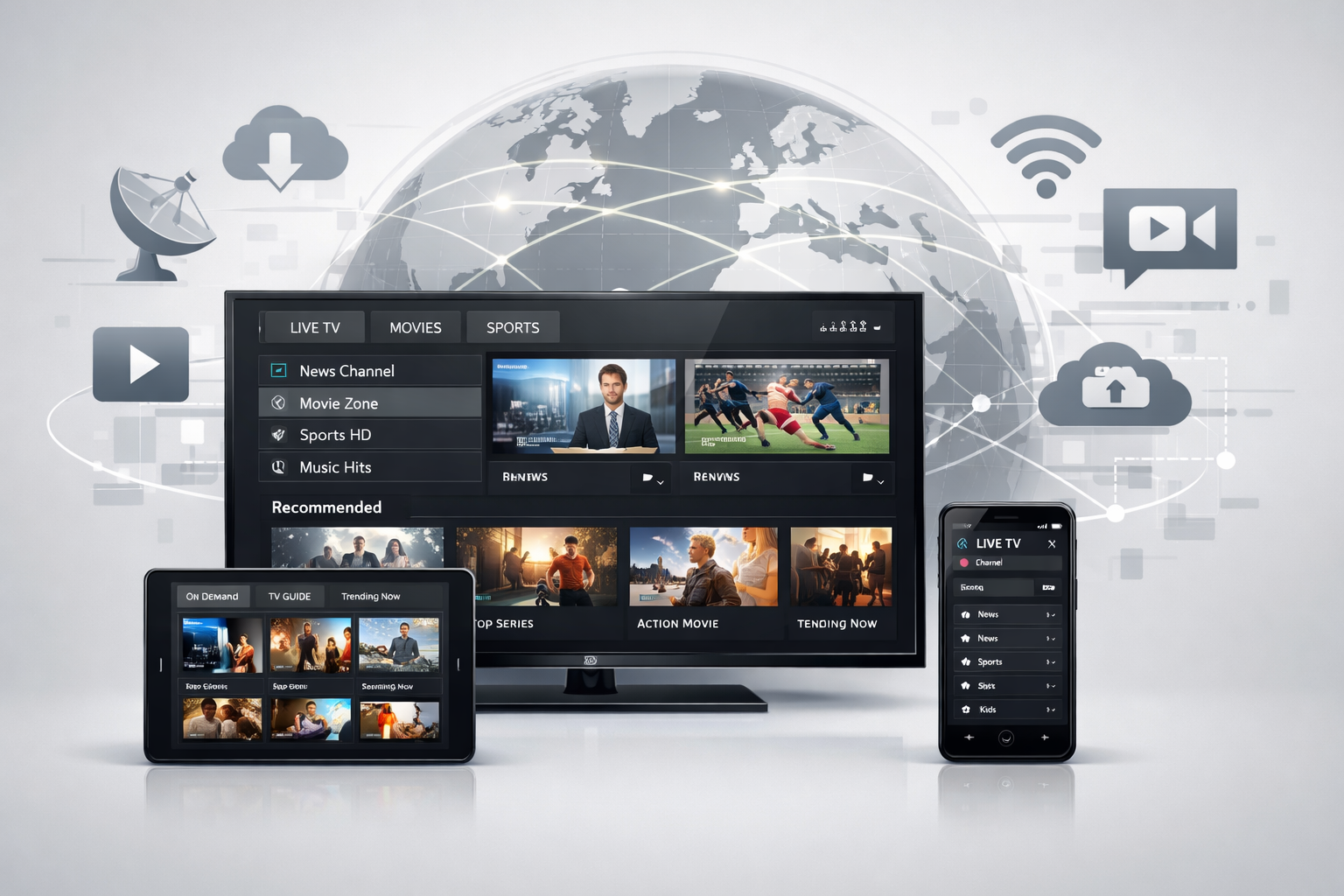
- Image prompt: Photorealistic UK living room scene. A smart TV shows a generic “IPTV Providers 2026” comparison dashboard with neutral cards (Stability, Peak-Time Test, EPG Quality, VOD Organisation, Device Support, Support Response, Privacy). A streaming box and one remote on the table. A phone and tablet display the same generic comparison screen. No logos, no channel names, no copyrighted content, no brand marks. Soft daylight, realistic reflections, professional product photo, 16:9, high detail.
- SEO filename: iptv-providers-2026-uk.webp
- Exact alt text: iptv providers comparison displayed across multiple streaming devices
Table of contents
- What are IPTV providers?
- How IPTV providers operate (simple model)
- Types of IPTV providers in 2026
- IPTV providers vs traditional TV companies
- What IPTV providers usually offer
- How to evaluate IPTV providers in 2026 (UK checklist)
- Quick testing plan (48-hour reality check)
- Common mistakes when choosing a provider
- FAQ
- External resources & related posts
1) What are IPTV providers?
IPTV providers are services that deliver live TV and video content through internet-based delivery (IP networks) instead of broadcasting via cable or satellite. In practical terms, they supply the “content access layer” (streams + libraries), while your app/player supplies the interface you browse on your device.Key idea: the provider affects availability and stability; the player affects navigation and usability. A great app can’t fix an unstable provider during peak time.
2) How IPTV providers operate (simple model)
Most IPTV providers follow a similar workflow:- Content management: organising access to channels and VOD libraries.
- Encoding & packaging: preparing streams for different devices and bandwidth conditions.
- Distribution: delivering streams via servers and routing that can handle concurrent viewers.
- Access methods: accounts, portals, or playlist credentials used by apps/players.
3) Types of IPTV providers in 2026
Licensed IPTV providers
Providers operating with appropriate broadcasting/distribution rights and compliance within their regions. These are typically more transparent about terms and availability.- Clearer policies and service boundaries
- Usually more consistent support expectations
- Often integrated into mainstream platforms
Unofficial / unclear licensing providers
Some providers operate without clear licensing or transparency. Legality and availability can vary by region, and reliability may fluctuate as links and servers change.- Higher risk of outages and removals
- Support can be inconsistent
- Transparency is often limited
Managed IPTV systems (business use)
Controlled IPTV setups used by hotels, venues, or organisations. These often run on managed networks with defined content libraries and strict administration.- Central management and predictable devices
- Designed for stability and controlled access
- Different from consumer IPTV subscriptions
This guide is informational and focuses on how to evaluate providers from a stability and usability perspective.
4) IPTV providers vs traditional TV companies
| Aspect | IPTV providers | Traditional TV |
|---|---|---|
| Delivery method | Internet-based streaming | Cable / satellite broadcast |
| On-demand access | Common (live + VOD) | More limited (schedule-led) |
| Device flexibility | High (TV, mobile, desktop) | Mostly TV-centric |
| Scalability | Depends on server capacity | Depends on physical infrastructure |
5) What IPTV providers usually offer
Most IPTV providers include some combination of:- Live TV channels
- Video on demand (VOD) libraries
- Catch-up / replay features (availability varies)
- EPG (programme guide) support (quality varies a lot)
- Multi-device access rules (device limits differ by plan)
“More content” isn’t always better if the library is messy or unstable. Organisation and reliability usually beat raw volume.
6) How to evaluate IPTV providers in 2026 (UK checklist)
Stability (the #1 signal)
- Do streams hold up during 7–11 PM UK time?
- Is buffering random, or tied to predictable peak patterns?
- Do multiple channels fail together (upstream load sign)?
EPG and navigation quality
- Does the guide load consistently (when data exists)?
- Are categories organised logically?
- Does switching between channels feel fast?
Device compatibility
- Works smoothly on your main TV device (stick/box/Smart TV app)
- Playback is stable on mobile as a backup
- No constant re-logins or playlist failures
Support and transparency
- Clear terms and basic policies
- Real troubleshooting help (not only sales)
- Reasonable expectations around outages and fixes
7) Quick testing plan (48-hour reality check)
- Peak-time test: 30–45 minutes between 7–11 PM UK time.
- Switching test: 10 rapid channel switches; note freezes and delays.
- EPG test: refresh guide; confirm device time/timezone is correct.
- Second device test: try the same stream on phone/tablet (isolates device issues).
- Network baseline: test Ethernet once (even briefly) to see if Wi-Fi is the bottleneck.
If Ethernet fixes everything, invest in network stability first (router placement, 5GHz, interference, or wired connection).
8) Common mistakes when choosing a provider
- Buying on “channel count” alone instead of testing stability.
- Testing only at midday (peak time is where weak services collapse).
- Blaming the player when the issue is upstream load or home Wi-Fi interference.
- Using massive categories and never building favourites (makes every app feel slower).
- Ignoring device limits and expecting unlimited simultaneous streams.
FAQ
Are IPTV providers the same as IPTV player apps?
Why do some providers work fine for movies but struggle on live sports?
What is the most reliable “first fix” for buffering?
🌐 External resources
Neutral references (safe outbound linking).