
IPTV Smarters Player is a playback app — it helps you watch Live TV, VOD, and Series using access details you already have.
The app itself does not provide channels. This UK guide focuses on setup quality, daily usability, and practical fixes
(EPG, buffering, login/playlist issues).
IPTV Smarters Player Guide (2026): Features, Setup, Fixes & Best Practices
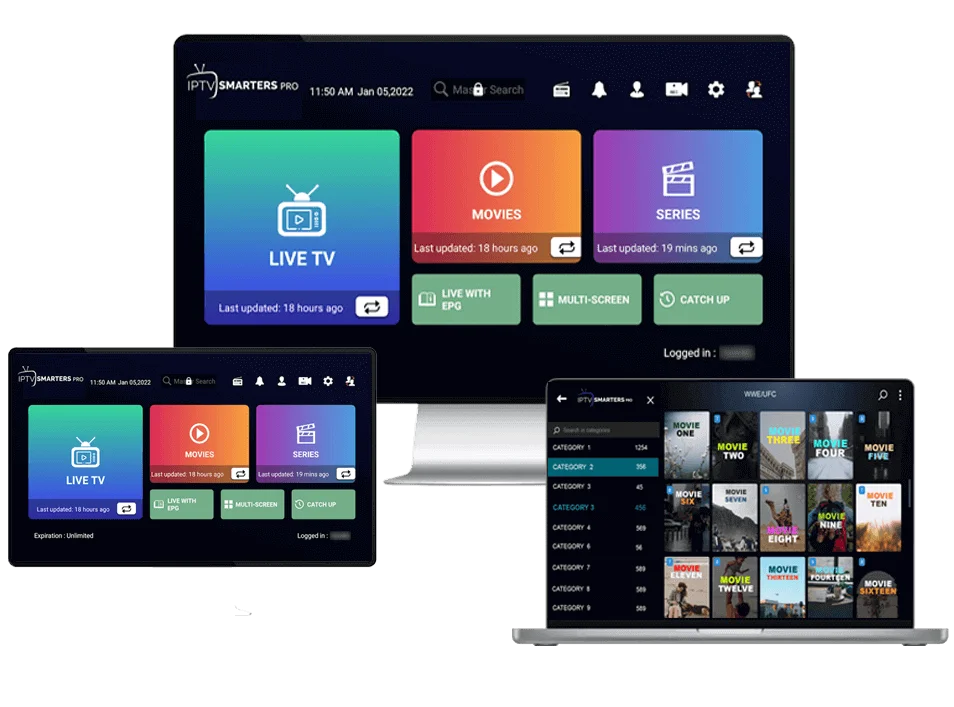
- Image prompt: Photorealistic UK living room. A modern smart TV displays a generic IPTV player dashboard (no logos) with neutral tiles: Live TV, Movies, Series, EPG, Profiles, Network Test, Settings. A streaming box and one remote on the TV unit, and a smartphone showing the same generic dashboard. No channel names, no copyrighted content, no brand marks. Soft daylight, realistic reflections, professional product-photo style, 16:9, high detail.
- SEO filename: iptv-smarters-player-uk-guide.webp
- Exact alt text: iptv smarters player interface on a smart TV showing a generic live tv and settings dashboard (UK guide)
Only access content you’re authorised to view, and review terms/policies before subscribing.
You can also read: IPTV Smarters EPG Guide.
Table of contents
- What the app is (and isn’t)
- How it works (simple mental model)
- Setup methods: portal login vs M3U
- Daily-use features that actually matter
- Devices + performance tips (UK households)
- Buffering diagnosis: app vs network vs upstream
- EPG not working? Fixes that usually work
- Login failed / playlist won’t load (quick flow)
- Make it feel faster (best practices)
- Privacy & safety basics
- FAQ
- Resources & internal guides
Quick action
Best test: one real live event at peak time
Best EPG fix: correct timezone/time
Best habit: favourites-first
Want a safer “how to choose” framework (still informational)?
Start here: IPTV Providers Checklist.
Neutral speed check (helps diagnose buffering causes):
Cloudflare Speed Test
1) What IPTV Smarters Player is (and isn’t)
IPTV Smarters Player is an IPTV player — a user interface that loads streaming libraries from access details you already have
(credentials, portal details, or a playlist link). Its job is to present content in a TV-style layout: categories, favourites, search,
and a guide/EPG when guide data exists.
The biggest misunderstanding is thinking the app “comes with channels”. It doesn’t. If you remove your login or playlist input,
there’s nothing to play. That’s not a flaw — it’s how IPTV player apps work.
✅ It IS
Good sign
- A playback dashboard for IPTV streams
- A way to organise Live TV / VOD / Series
- Often guide-friendly (if your provider supplies EPG data)
- Useful for favourites, categories, and family navigation
❌ It is NOT
Avoid confusion
- A provider or channel source
- A guarantee of “no buffering ever”
- A fix for peak-time congestion upstream
- A replacement for stable Wi-Fi/Ethernet
In real homes, the best experience comes from a simple triangle:
clean input (no typos/spaces), stable network, and a capable device.
When those three are solid, the app feels smooth and predictable.
2) How it works (a simple mental model)
If you understand the pipeline, you troubleshoot faster. Most IPTV player apps follow the same logic:
- Input: You add access details (portal + username/password) or a playlist URL/file.
- Library load: The app imports channels, VOD, series, posters, and EPG (if provided).
- UI rendering: It builds categories, favourites, and menus.
- Playback: It starts the stream and your device decodes it (network + device + upstream load all matter).
This matters because “my channels don’t load” and “my playback buffers” are different problems.
Loading failures are usually input/portal issues or server availability; buffering is usually network/device limitations
or upstream load during peak hours.
You’ll fix issues faster by not mixing them.
3) Setup methods: portal login vs M3U (what’s easiest)
Setup is where most users fail — not because it’s complicated, but because one hidden space or wrong character breaks everything.
Here’s the practical difference between the two most common methods.
Portal-style login (API / Xtream-style)
Usually easiest
If supported, this often loads categories cleanly and keeps the library organised. Great for daily use.
- Create a new profile/user inside the app
- Select the portal-style login method
- Copy/paste portal URL + username + password (avoid typing)
- Load content → test 3 channels → add favourites
M3U playlist URL/file
Flexible
Works via a playlist URL or a local file. Very large playlists can feel heavy on older devices.
- Add a new playlist
- Paste the M3U URL exactly (no trailing spaces)
- Import categories
- Test switching + guide (if you have an EPG URL) + one VOD item
It makes the interface feel faster and more “TV-like”.
For UK households, the most reliable routine is: set up on the main TV device first, confirm everything loads, then replicate the same method
on secondary devices. Don’t start with a phone-only setup if the main viewing happens on a TV.
4) Daily-use features that matter (not fluff)
Feature lists are often marketing. The features that actually improve daily usability are the ones that reduce friction:
fewer clicks, faster browsing, fewer restarts, and fewer “where is that channel?” moments.
EPG (TV guide)
Daily value
- Helps browse by time/programme instead of guessing channel names
- Requires correct device timezone/time
- Depends on whether guide data exists
Favourites + category cleanup
Makes it feel fast
- Favourites-first reduces “menu overload”
- Hiding unused categories reduces lag on weaker devices
- Creates a household-friendly “home list”
A common mistake is leaving thousands of channels visible and then blaming the app for feeling slow.
In real homes, people watch a small set daily. Build a short favourites list and you’ll feel the difference quickly.
5) Devices supported + performance tips (UK households)
IPTV player apps can work across multiple platforms, but performance depends heavily on the device’s decoding ability and memory.
If playback stutters on one device but not another, that often points to the device — not the provider.
Common supported device types
Availability varies
- Android phones/tablets
- Android TV / Google TV devices
- Streaming sticks/boxes
- Some smart TV ecosystems (app availability differs)
- Desktop versions exist depending on distribution
Performance upgrades that work
Best practices
- Ethernet for the main TV device (most reliable)
- 5GHz Wi-Fi close to router if Ethernet isn’t possible
- Keep storage free (low storage can cause stutter)
- Restart the device weekly if it’s low-memory
UK reality: Many buffering complaints are simply weak Wi-Fi where the TV sits (far from the router, thick walls, interference).
A single wired test can instantly reveal whether Wi-Fi is the bottleneck.
6) Buffering diagnosis: app vs network vs upstream
Buffering is usually a pattern problem. Don’t guess — observe when it happens:
only at night? only during sports? only on one device? only in one room? Those patterns tell you the root cause.
- Improves closer to the router
- Ethernet is smooth while Wi-Fi buffers
- Only one device buffers (others are fine)
- Problems worsen during downloads/updates
- Works daytime, struggles evenings/weekends
- Live events trigger instability
- Many channels degrade together
- Temporary improvement when switching streams
Fast isolation test: Try the same channel on a different device and once on a hotspot.
If hotspot fixes it, the issue is likely your ISP/router/Wi-Fi. If hotspot doesn’t fix it, the issue is more likely upstream.
7) EPG not working? Fixes that usually work
Guide problems usually come from one of three causes:
(1) guide feed down or not provided, (2) timezone/time mismatch, or (3) stuck cache.
Fix local causes first because they’re fastest.
- Refresh EPG inside the app and wait 60–120 seconds.
- Check timezone/time on the device (wrong time = wrong guide mapping).
- Clear cache (avoid “clear data” unless you want to re-login).
- Test another category to see if it’s only one group affected.
- If nothing loads, the guide feed may be down temporarily.
| Symptom | Most likely cause | Best first step |
|---|---|---|
| EPG blank everywhere | Feed down / not provided | Refresh, wait, confirm EPG exists |
| EPG shows wrong hours | Timezone/time mismatch | Fix device time, restart app |
| Only some categories show EPG | Incomplete mapping | Test other groups, rebuild favourites |
| EPG loads then disappears | Cache/memory issues | Clear cache + restart device |
8) Login failed / playlist won’t load (quick flow)
When login fails, most people start changing random settings. Don’t.
Use a clean flow so you don’t waste time and accidentally introduce new variables.
Do these first
Most common fixes
- Copy/paste credentials (no typing)
- Remove trailing spaces in URLs
- Delete the profile and re-add cleanly
- Restart the device after adding
If it still fails
Isolate the cause
- Hotspot test (isolates ISP/network)
- Test on a second device (isolates device)
- Try again later (portal may be down temporarily)
Small detail that breaks everything: a hidden space at the end of a portal URL.
If you suspect this, paste into a plain text note, delete any trailing space, then copy again.
9) Make the app feel faster (best practices)
Most “slow app” complaints are actually “too much library” problems.
A cleaner library makes everything faster: menus open quicker, search feels responsive, and favourites load instantly.
- Favourites-first: keep your daily list short (10–30 channels).
- Hide unused categories: remove duplicates you never open.
- Peak-time test: evenings/weekends reveal real stability.
- Restart occasionally: low-memory devices improve after a restart.
- Network baseline: test Ethernet once to confirm if Wi-Fi is the bottleneck.
If a setup stays smooth during real viewing hours (roughly 7–11 PM), with clear rules and responsive help, it usually feels premium
even without flashy features.
10) Privacy & safety basics
Treat playlists and logins like account credentials. Avoid sharing portal links publicly, don’t reuse important passwords,
and keep your device clean (updates, storage, trusted install sources).
- Use reputable install sources when possible.
- Avoid “optimizer” apps promising miracles.
- Don’t reuse passwords you use for email/banking.
- Keep device time correct (guide and playback can break when time is wrong).
If you’re troubleshooting often, keep a simple log: device name, connection type (Ethernet/Wi-Fi), time of day, and what you were watching.
Patterns appear quickly, and you stop guessing.
11) FAQ
Does IPTV Smarters Player include channels?
No. It’s a player. You need access details or a playlist from a service you already use.
Why is my guide empty?
Usually guide feed issues, timezone mismatch, or cache. Start with refresh → timezone → clear cache.
Is buffering always the app’s fault?
No. It’s commonly peak load, Wi-Fi conditions, ISP routing, or device limitations.
Fastest way to troubleshoot?
Test on a second device + hotspot once. It isolates device vs network vs upstream issues quickly.
If you want a simple “one-screen” routine: start with a wired test, then build favourites, then validate guide/timezone.
Most day-to-day issues disappear once those are stable.
12) Resources & related internal guides
External resources (neutral)
These are general references (safe, non-provider, non-DMCA-adjacent).
Related internal guides
- IPTV Smarters EPG Guide
- Best IPTV Service (Editorial Guide)
- IPTV Providers Checklist
- Pricing (plans overview)
Internal links strengthen topical authority without risky outbound linking.